Resilient Environments
Southeast False Creek
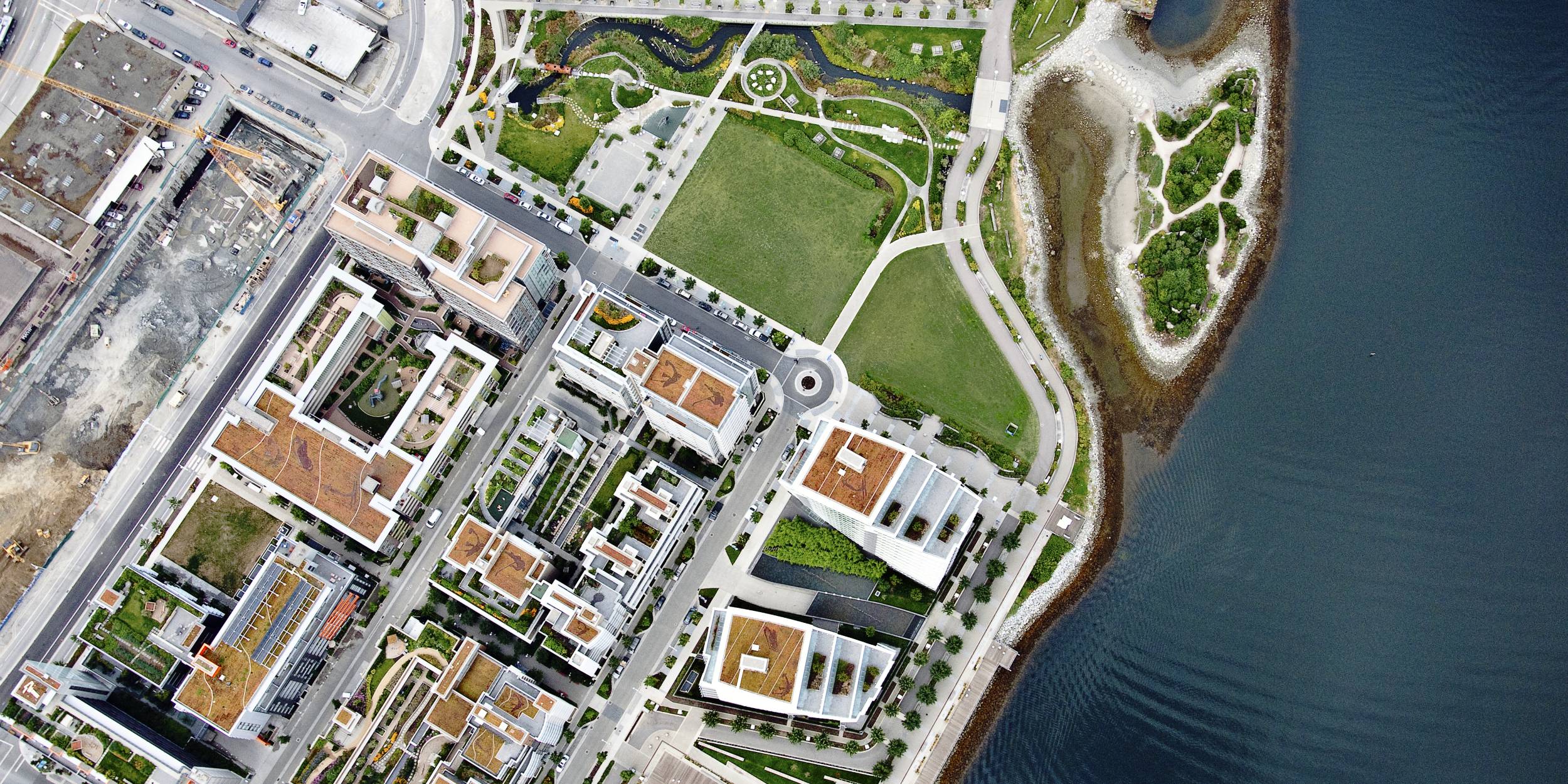
Southeast False Creek is Vancouver’s newest urban waterfront community, envisioned as the city’s first sustainable neighbourhood. It is a vibrant pilot project to test green infrastructure. This project was one of the first LEED® Platinum neighbourhoods in North America. The entire project totals 80 acres/32.5 hectares, and is built on one of the last industrial waterfront sites remaining in the inner city, providing a new neighbourhood for 12-16,000 people. The parks and open space design includes a wide range of community-oriented recreational uses, ranging from passive park space to active uses such as inline skating, bicycling, and informal field sports. Innovative ecological and social initiatives are embedded throughout and include shoreline habitat, rewilding, stormwater management, village square, and common gathering places. PWL’s collaborative scope included the Official Development Plan, Public and Private Realm Design Guidelines, implementation of the foreshore, waterfront, streets, and Hinge and Triangle parks.
About
Vancouver, British Columbia | 2005-2011Owner + Client
Select Awards
Urban Land Institute Open Space Award
United Nations Environment Program’s Livable Communities Best Built Project Award
Canadian Institute of Planners Planning Excellence Award
CSLA National Merit Award
Canadian Urban Institute Brownie Award
Waterfront Center Honor Award
Royal Architecture Institute of Canada Urban Design Award
Collaborators

Southeast False Creek is one of Vancouver’s newest urban waterfront communities, envisioned as the city’s first sustainable neighbourhood. It’s a vibrant pilot project to test green infrastructure. This project was one of the first LEED® Platinum neighbourhoods in North America. The entire project totals 80 acres/32.5 hectares, built on the last industrial waterfront site remaining in the inner city. PWL played a critical role on a multi-disciplinary team, preparing the Official Community Plan and Public Realm Design Guidelines with the City of Vancouver. Our work focused on the waterfront park and promenade, Hinge Park, and the streets within the Olympic Village area.
Just west of the Olympic Village, Hinge Park provides play space for kids while also serving as a natural environment for the newly-built community. The park is focused around an urban wetland that cleanses all the street stormwater, circulating it through a series of terraces before it goes back into the Creek.

The waterfront park features an extension of a seawall promenade—a separated bike and pedestrian route that winds through an integrated and varied park system, connecting the public to the water’s edge. The site materials and landscape design reflect this historic neighbourhood’s industrial past. Materials are regional, reusable, and robust enough to last for the next 75 years. Old logs line the wetland, reminiscent of fallen timber along streams. A recycled aluminum dock ramp has been fashioned as a bridge across the wetland that connects the public to the promenade and a fenced dog park. Playful custom seating—from swivel chairs to oversized loungers and giant cleats—nod to the shipbuilding industry that previously occupied the site.

Runnels collect rainwater and direct it to reed and grass beds, before depositing it into the ocean. Several ecosystems have been created in the park with the use of native plant materials, natural meadows, wildflower slopes, and wetland terraces to foster biodiversity. Birdhouses line the park and wetland edge, giving a home to the songbirds that inhabit the area. Tidal terraces and a new, man-made island become accessible at low tide and foster rich aquatic life not seen in False Creek for more than 80 years. Berry picking patches and viewing decks create places alongside the wetland for children, parents and park users to relax, socialize, and explore.


