A practice shaped by place: The early years of PWL Partnership
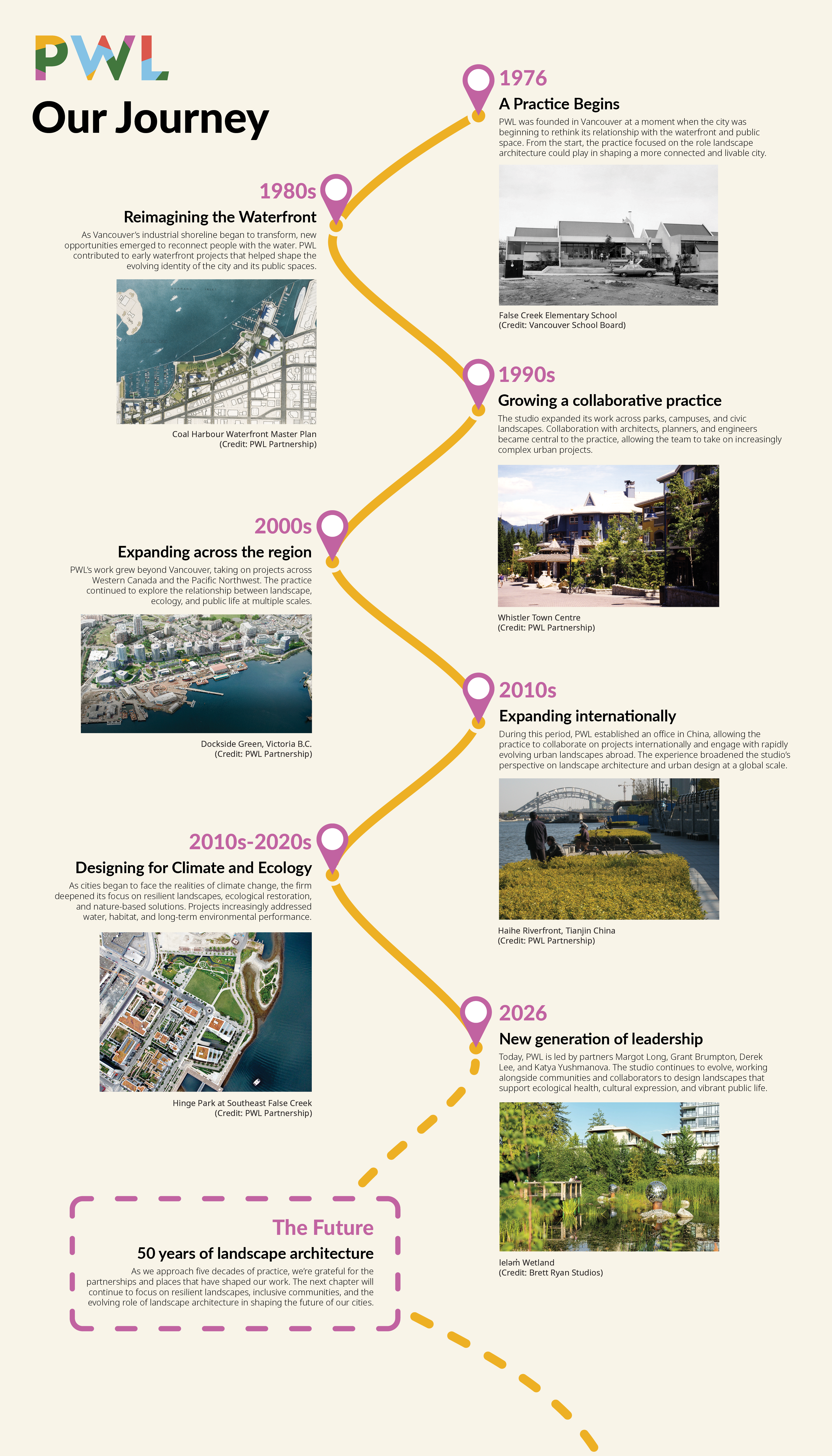
The practice that would become PWL Partnership was founded in Vancouver in 1976, at a time when the city was beginning to rethink its relationship with its waterfronts, public spaces, and natural landscapes.
Founding partner Jeff Philips believed landscape architecture could play an important role in shaping a more livable and connected city. From the beginning, the practice focused on the relationship between people, ecology, and the public realm.
Margot Long joined the firm in 1985. after studying landscape architecture at the University of Oregon and working with Don Vaughan, a pioneering landscape architect in British Columbia. Her passion for designing landscapes that serve both people and the environment helped shape the direction of the practice and continue to influence our work today.
Shaping a changing city
Over the decades, Vancouver underwent a profound transformation. Industrial waterfronts became parks and public spaces, new neighbourhoods were built along the shoreline, and the city began to embrace a more unified approach to urban design and landscape.
PWL played a role in many of these changes, contributing to projects that reconnected people to the water, expanded connections to green space, and helped shape the character of the city’s evolving neighbourhoods.
During this time the firm became Philips Wuori Long, reflecting the partnership between Jeff Philips, Don Wuori, and Margot Long. The studio grew steadily, taking on increasingly complex projects that blended landscape architecture with urban design and planning.
Growing the practice
As the practice expanded, new partners brought fresh perspectives and expertise.
Leaders including Bruce Hemstock, Chris Sterry, Derek Lee, Grant Brumpton, and Jason Wegman helped grow the firm’s work across parks, waterfronts, campuses, housing communities, and civic spaces. Together, they strengthened the studio’s commitment to collaboration, sustainability, and thoughtful design.
Through these decades of change, the practice remained grounded in a simple idea: landscapes should serve both people and the environment.
Continuing the journey
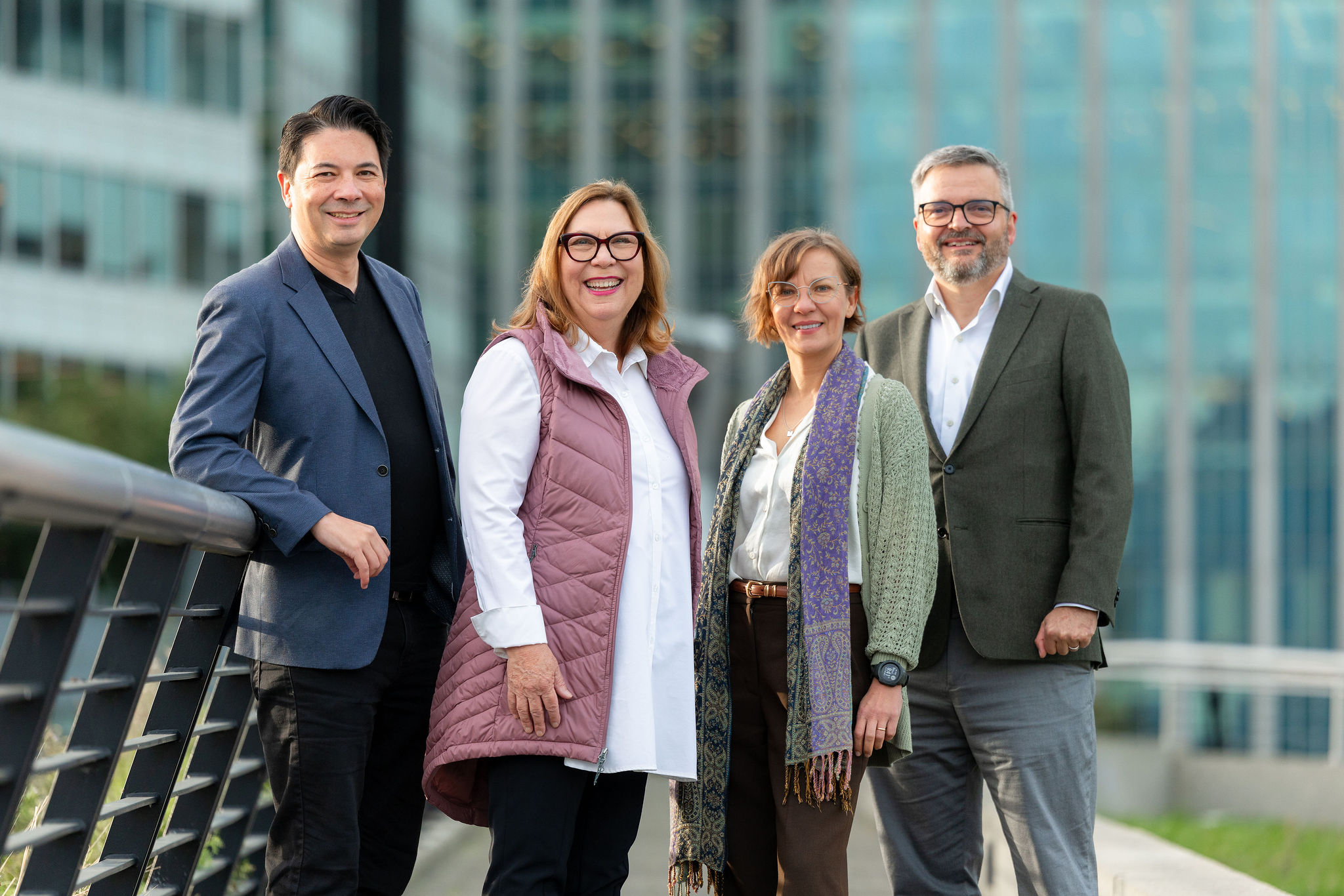
Today, PWL is led by partners Margot Long, Grant Brumpton, Derek Lee, and Katya Yushmanova.
Together they bring a mix of long-standing experience and new perspectives, guiding the firm as it continues to evolve in response to changing cities, communities, and climates.
While our work continues to grow across Canada and beyond, the Pacific Northwest remains central to who we are. The landscapes, ecosystems, and communities of this region continue to shape our approach to design.
Looking ahead
As we approach 50 years, we are proud of the landscapes we’ve helped shape and the relationships we’ve built along the way.
But the work of landscape architecture has never been more important.
Cities are adapting to climate change. Communities are seeking more inclusive public spaces. Indigenous leadership and stewardship are reshaping how we think about land and place.
These challenges — and opportunities — will define the next chapter of our work.
We look forward to continuing to design landscapes that support community life, strengthen ecological systems, and contribute to a more resilient future.